
Connected Cars Explained: How Smart Technology Enhances Driving Experiences
For generations, the automobile existed as a closed mechanical universe. An internal combustion engine turned a transmission, which rotated an axle, while an analog instrument cluster reported speed and fuel levels. If a problem developed under the hood, a technician plugged a physical cable into an onboard diagnostic port to pull trouble codes. When you pulled out of the driveway, the vehicle was effectively an isolated island of steel and glass, untethered from the world around it.
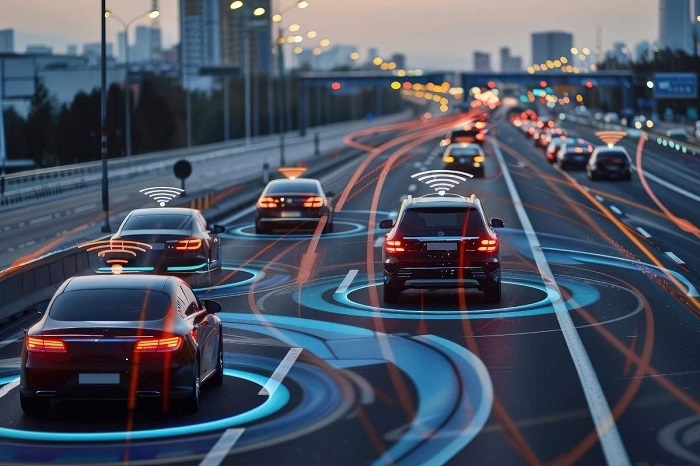
That mechanical isolation has largely disappeared. Today, the modern vehicle operates less like a standalone machine and more like an expansive, rolling internet-of-things platform. A connected car integrates bidirectional wireless communication networks, onboard computer processors, and sophisticated sensor arrays, linking its operational hardware directly to cloud databases, smart municipal infrastructure, and nearby traffic.
This connectivity is not merely a novelty designed to stream music or display smartphone apps on a center console. It represents a fundamental overhaul of automotive architecture that improves active safety, streamlines maintenance, and changes the daily experience of vehicle ownership.
The Operational Architecture of a Connected Car
To appreciate how connected vehicles improve daily driving, it helps to understand what happens beneath the dashboard. At the heart of any connected automobile is the Telematics Control Unit (TCU). Equipped with an embedded cellular modem, a global navigation satellite receiver, and dedicated memory, the TCU acts as the vehicle’s communication gateway.
The TCU interfaces with the vehicle’s internal nervous system, known as the Controller Area Network, or CAN bus. The CAN bus links hundreds of localized electronic control units monitoring everything from wheel speed and steering angle to tire pressure, battery temperature, and forward-facing camera feeds.
By bridging the internal network with external cellular towers, the vehicle establishes a continuous, low-latency dialogue with cloud servers. The car constantly transmits performance telemetry and environmental data to the cloud, while simultaneously downloading traffic updates, meteorological alerts, firmware optimizations, and remote commands.
This framework also supports emerging Vehicle-to-Everything (V2X) communication standards. V2X allows cars to communicate directly with other vehicles (V2V), roadside infrastructure like traffic lights and digital speed signs (V2I), and vulnerable road users such as cyclists and pedestrians (V2P), laying the technical groundwork for a cooperative driving environment.
Collective Road Awareness and Preventive Safety
The most significant advantage of vehicular connectivity is the shift from passive protection to collective, proactive hazard avoidance. Traditional active safety features—such as automatic emergency braking and blind-spot monitors—rely solely on what the car’s individual radar and camera sensors can see in their immediate line of sight.
Connected systems expand that field of vision well beyond physical sightlines through crowdsourced hazard telemetry.
Imagine a car traveling two miles ahead of you around a blind mountain curve. If that vehicle suddenly encounters black ice, its stability control system fires, its anti-lock brakes engage, and its hazard lights activate. In a connected ecosystem, that car instantly uploads an encrypted event ping to the cloud. Moments later, your vehicle’s digital display flashes a targeted warning about slippery road conditions ahead, while your car gently primes its own brake pads and tightens seatbelts before the ice ever comes into view.
Connectivity also transforms emergency assistance. Automatic collision notification systems do far more than detect an inflated airbag. They transmit precise crash coordinates, roll orientation, impact velocity, and the number of buckled seatbelts directly to regional emergency dispatchers. Paramedics arrive at the scene with accurate triage data before anyone inside the vehicle has had time to find a phone.
Dynamic Navigation and Operational Efficiency
Static satellite navigation maps are largely obsolete. In a connected vehicle, routing software treats the road network as a living, shifting organism.
Cloud-based navigation continuously ingests live traffic velocity data from thousands of vehicles traveling the same corridors. If a lane closure or an unexpected stall begins to choke highway capacity, algorithms reroute trailing traffic along optimal bypass routes before major gridlock solidifies.
For electric vehicles, connectivity is indispensable for range optimization and battery conditioning. Modern EV navigation platforms calculate remaining charge by factoring in live headwinds, real-time elevation changes, ambient outside temperatures, and cabin heating demands.
As you approach a scheduled fast charger, the vehicle communicates remotely with the station to confirm hardware availability, while simultaneously initiating thermal pre-conditioning of the battery pack. Bringing the battery cells to their ideal chemical temperature prior to plugging in slashes charging times and protects long-term cell health.
Predictive Diagnostics and Over-the-Air Evolution
Historically, car maintenance was purely reactive. Drivers waited for an oil warning light to glow, an unusual squeal to emerge from a wheel well, or an engine to stall out before scheduling a service visit.
Connected vehicles replace reactive repairs with predictive maintenance modeling. Machine learning models running in the cloud analyze continuous telemetry streams, comparing an individual car’s sensor signatures against fleet-wide performance baselines. The system can detect anomalous electrical draws from a failing alternator, measure minor variations in fuel trim, or identify minute pressure drops in a cooling loop weeks before a catastrophic mechanical failure occurs. Owners receive actionable alerts detailing the exact component needing attention, allowing service appointments to be handled on an orderly schedule rather than on the shoulder of an interstate.
The Impact of Over-the-Air (OTA) Updates
Equally transformative is the ability to service vehicles through over-the-air software distributions. In previous decades, addressing an erratic transmission shift point or an infotainment glitch required an inconvenient trip to a dealership service bay.
Today, automakers distribute software patches wirelessly directly to the vehicle’s onboard storage. These updates fix discovered bugs, enhance cybersecurity protections, improve power management, and occasionally unlock performance improvements or brand-new driver-assist capabilities overnight. A car parked in a garage on a Tuesday evening can wake up on Wednesday morning with refined throttle response and an upgraded user interface.
Digital Conveniences in Everyday Use
Beyond mechanical safety and predictive monitoring, connectivity fundamentally alters how drivers interact with their vehicles on an ordinary morning.
Through encrypted Ultra-Wideband (UWB) and near-field communication protocols, smartphones and smartwatches now function as secure digital car keys. The vehicle senses the authorized device as the driver walks up, automatically unlocking the doors, adjusting the driver’s seat and side mirrors, tuning to preferred media channels, and loading personalized climate settings.
Remote climate preconditioning allows owners to heat or cool the cabin while the vehicle is still plugged into a residential charger, preserving battery range for the road ahead while ensuring comfortable interior temperatures in the depths of winter or peak summer.
Balancing Innovation with Data Privacy and Security
As vehicles become increasingly computerized and networked, the industry faces real challenges surrounding data stewardship and digital security.
Modern automobiles collect substantial volumes of data, including driving habits, braking patterns, geographical locations, and paired mobile phone directories. Establishing clear consumer protections, transparent opt-in agreements, and rigorous privacy boundaries is critical to ensuring that personal driver data is not monetized without explicit consent.
Cybersecurity also demands intense engineering focus. Automakers isolate critical driving controls—such as electronic steering racks, drive-by-wire throttles, and braking actuators—behind robust hardware firewalls, completely separating them from public-facing infotainment systems and cellular gateways. Multi-layered encryption, intrusion detection software, and rigorous third-party penetration testing serve as necessary shields against malicious digital interference.
Connected vehicle technology is not a distant concept destined for futuristic prototypes; it is the operating standard for modern transportation. By merging real-time data exchange, collective safety intelligence, over-the-air agility, and seamless digital personalization, smart technology turns ordinary commuting into a more intuitive, safer, and far more responsive experience


